
fearless adventure

Complete Guide to Mount Meru Trekking

Mount Meru trekking is one of the most exciting adventures in Tanzania, attracting hikers seeking both challenge and natural beauty. Located in Arusha National Park, Mount Meru stands as the second-highest mountain in Tanzania after Kilimanjaro. Many travelers choose Mount Meru trekking as a preparation climb before Kilimanjaro, while others appreciate its peaceful trails, impressive scenery, rich biodiversity, and rewarding summit experience throughout every season.

Unlike many mountain adventures, Mount Meru trekking combines wilderness, volcanic landscapes, dense forests, and remarkable wildlife into one unforgettable journey. Climbers often encounter giraffes, buffaloes, monkeys, antelopes, and colorful bird species while ascending lower slopes. These close wildlife encounters create an atmosphere rarely found on other mountain climbs, making every stage of the trek memorable, engaging, visually rewarding, and deeply inspiring for visitors.

The mountain’s changing environment keeps every hiking day interesting, with lush rainforest gradually giving way to open moorlands, rocky ridges, and breathtaking alpine scenery. Along the route, panoramic viewpoints reveal Mount Kilimanjaro on clear mornings, adding another unforgettable highlight. The combination of changing ecosystems, peaceful surroundings, and fewer climbers creates an authentic adventure that feels personal, immersive, and genuinely connected to Tanzania’s natural heritage.

In this complete guide, you will learn everything about Mount Meru trekking, including routes, itinerary, cost, best time to visit, and expert tips. Whether you are a beginner or an experienced climber, this guide provides practical information to help you prepare properly, understand what to expect, choose suitable options, and plan your journey with greater confidence from beginning to successful summit.

Why Choose Mount Meru Trekking?

Mount Meru trekking is perfect for travelers who want a genuine mountain adventure without heavy crowds or busy trails. Compared to Kilimanjaro, the experience feels quieter and more personal, allowing hikers to connect with nature at a comfortable pace. The peaceful atmosphere makes every stage enjoyable, especially for photographers, wildlife enthusiasts, and visitors seeking a less commercial but equally rewarding trekking destination in Tanzania.

Another reason to choose Mount Meru trekking is the stunning scenery that changes throughout the climb. The route passes through lush rainforests, open heathlands, alpine deserts, and dramatic rocky ridges, creating constant visual variety. Each elevation reveals different landscapes, making the journey itself as rewarding as reaching the summit while offering countless opportunities for memorable photographs and quiet moments surrounded by nature.

One of the most unforgettable highlights is reaching the summit during sunrise, where clear weather often reveals spectacular views of Mount Kilimanjaro rising above the surrounding plains. This remarkable perspective rewards early morning efforts and gives climbers an appreciation of northern Tanzania’s volcanic landscapes. Witnessing two iconic mountains within one panoramic view creates lasting memories that few trekking destinations can match anywhere.

The climb is also more affordable than Kilimanjaro, making it attractive for travelers seeking excellent value without sacrificing adventure. Many visitors choose Mount Meru trekking because it combines scenic beauty, wildlife encounters, and challenging hiking into one experience. Lower overall costs, fewer crowds, and rewarding landscapes make this trek an outstanding choice for both first time climbers and experienced outdoor enthusiasts alike.

Location and Overview

Mount Meru trekking

Mount Meru is located in northern Tanzania, inside Arusha National Park, one of the country’s most scenic protected areas. Rising to 4,566 meters above sea level, it is Tanzania’s second-highest mountain after Kilimanjaro. Although lower in elevation, Mount Meru trekking remains physically demanding, requiring good fitness, steady determination, careful pacing, and proper preparation for a successful and enjoyable climbing experience throughout.

The mountain is an active stratovolcano shaped by powerful volcanic activity over thousands of years. Its massive crater, dramatic cliffs, and steep slopes create an impressive landscape that captures attention from every direction. These remarkable geological features give Mount Meru a distinctive character, making the trek appealing not only to hikers but also to travelers interested in Tanzania’s fascinating volcanic history and natural formations.

During Mount Meru trekking, climbers follow sections of the crater rim, adding excitement and spectacular scenery to the journey. The narrow ridges provide sweeping views across the surrounding plains, forests, and distant mountains. Every stage of the ascent offers changing perspectives, creating an adventurous atmosphere while allowing trekkers to appreciate the mountain’s rugged beauty from several unforgettable vantage points along the route.

Mount Meru also serves as an excellent destination for those seeking a balanced combination of physical challenge, wildlife encounters, and breathtaking landscapes within a single expedition. Its accessible location near Arusha makes travel convenient, while the mountain’s diverse environments ensure every climbing day feels different. This rewarding experience leaves visitors with lasting memories beyond simply reaching the summit successfully together.

Mount Meru Trekking Routes

Mount Meru trekking

Momella Route (Main Route)

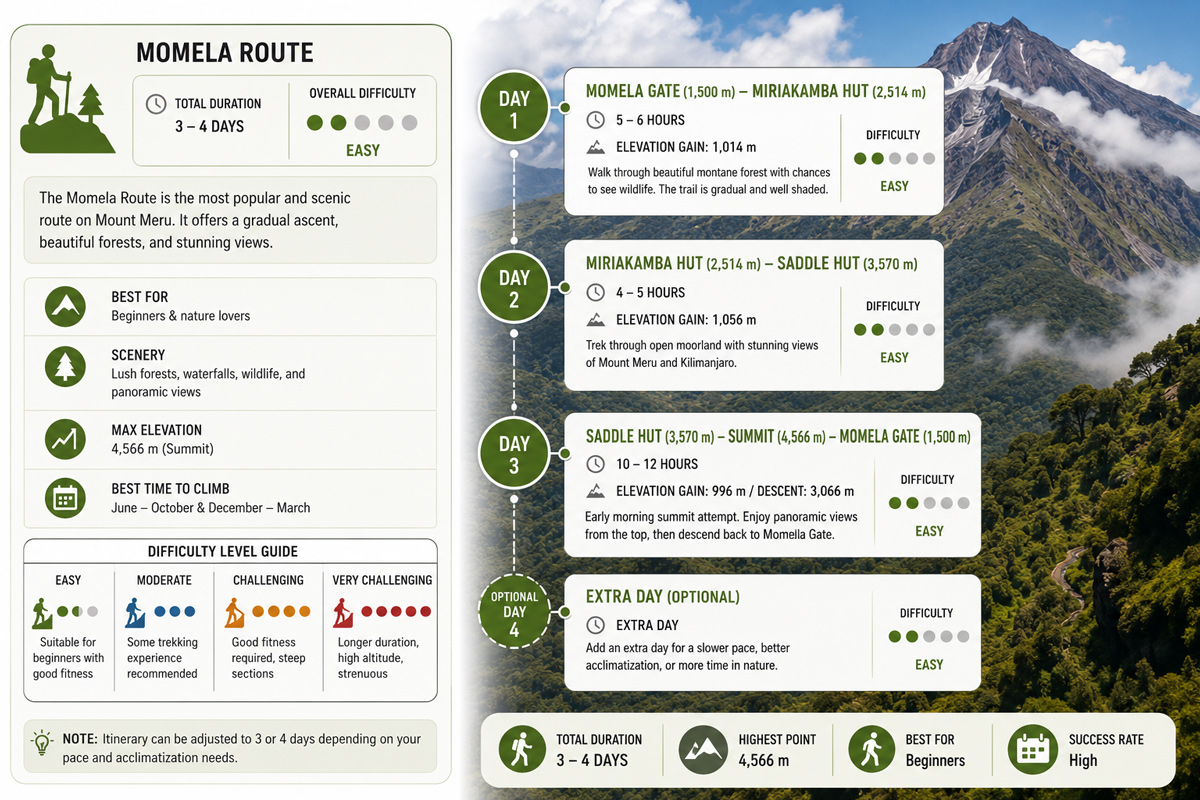
The Momella Route is the only official route for Mount Meru trekking and serves as the standard path for all summit attempts. Most climbers complete the journey in three to four days, allowing enough time for steady altitude gain and proper rest. Its carefully planned itinerary offers a balanced combination of adventure, scenic beauty, and gradual acclimatization, making the climb enjoyable for many fitness levels.

The route begins at Momella Gate inside Arusha National Park, where trekkers are accompanied by an armed ranger because wildlife frequently roams the lower slopes. The trail passes through lush forests inhabited by giraffes, buffaloes, monkeys, antelopes, and numerous bird species. These early wildlife encounters create an exciting start, making the trek feel more like a safari combined with mountain climbing.

As hikers gain elevation, the landscape gradually transforms from dense rainforest into open heathland, rocky terrain, and volcanic slopes with expansive views. Each section introduces different scenery, keeping the journey visually engaging from beginning to end. The changing environments also provide opportunities to observe unique mountain vegetation adapted to higher altitudes, adding educational value alongside the physical adventure itself.
Detailed Mount Meru Trekking Itinerary

Day 1: Momella Gate to Miriakamba Hut

Your Mount Meru trekking begins at Momella Gate, where registration and a short briefing introduce the adventure ahead. After completing park formalities, you start walking through lush forest surrounded by towering trees and fresh mountain air. The peaceful environment provides an enjoyable introduction to the climb while allowing trekkers to settle into a comfortable hiking rhythm before gaining significant elevation along the scenic trail.

As the trail winds through Arusha National Park, you may encounter giraffes, zebras, buffaloes, monkeys, and colorful birds living freely in their natural habitat. These remarkable wildlife sightings distinguish Mount Meru from many other mountain climbs. Every section of the forest offers opportunities to appreciate Tanzania’s biodiversity while enjoying a unique combination of safari experiences and mountain trekking within one unforgettable journey together.

Day 2: Miriakamba Hut to Saddle Hut

On the second day of Mount Meru trekking, the trail climbs steadily through higher forest before gradually entering the mountain’s alpine zone. The landscape changes noticeably as vegetation becomes shorter and temperatures cooler. This section demands greater physical effort, yet the rewarding scenery keeps motivation high while each step brings you closer to the mountain’s dramatic upper slopes and summit region.

As you continue climbing, the surrounding views become broader and increasingly spectacular. The impressive Meru Crater and the distinctive Ash Cone dominate the landscape, showcasing the mountain’s volcanic origins. The hike usually takes between three and five hours, allowing trekkers to maintain a comfortable pace while appreciating remarkable geological formations and wide panoramic views stretching across northern Tanzania’s beautiful countryside.

Day 3: Summit Day and Descent

Summit day is the most challenging part of Mount Meru trekking, beginning around midnight under a sky often filled with brilliant stars. Starting early allows climbers to reach Socialist Peak at sunrise while taking advantage of cooler temperatures. The quiet darkness creates a memorable atmosphere as every step brings anticipation for the rewarding views waiting above the mountain’s rugged volcanic ridges.

The climb toward Socialist Peak follows steep, narrow ridges requiring careful footing and steady determination. Although physically demanding, experienced guides maintain a manageable pace to help trekkers progress safely. As dawn approaches, the surrounding landscape slowly brightens, revealing dramatic volcanic cliffs and distant horizons that make every challenging section of the ascent worthwhile for determined climbers reaching the summit together.

Day 4: Return to Momella Gate

On the final day of Mount Meru trekking, you descend through the forest toward Momella Gate, following the same scenic trail that welcomed you earlier in the expedition. The downhill journey is generally more relaxed, allowing tired legs to recover gradually while providing another opportunity to appreciate the mountain’s peaceful surroundings and remarkable natural beauty before leaving the national park behind.

The forest comes alive with birdsong and wildlife activity during the morning, making the final walk especially enjoyable. Trekkers often notice details missed on the ascent, including towering trees, colorful flowers, and playful monkeys among the branches. The comfortable pace creates time to reflect on the achievements, challenges, and unforgettable experiences shared throughout the climb with fellow adventurers and dedicated guides.

Best Time for Mount Meru Trekking

Mount Meru trekking

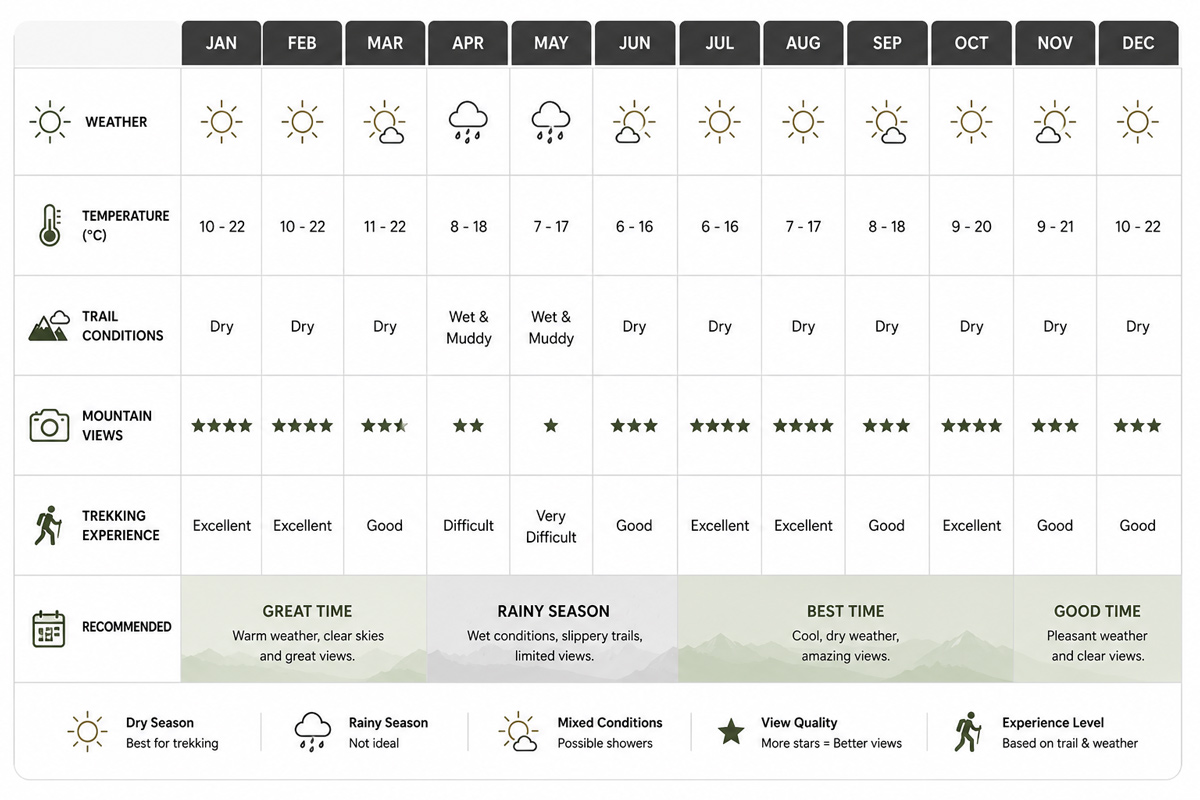
The best time for Mount Meru trekking is during Tanzania’s dry seasons, which run from June to October and again from December to February. These months provide the most reliable conditions for climbing, attracting hikers seeking comfortable weather and clear mountain views. Planning your trek during these periods increases the likelihood of enjoying favorable conditions throughout the entire adventure from start to finish.

During the dry months, weather conditions remain generally stable, with clearer skies and firmer trails that are easier to navigate. These favorable conditions make Mount Meru trekking safer and more enjoyable while reducing the chances of weather-related delays. Excellent visibility also allows trekkers to appreciate sweeping landscapes, observe distant Mount Kilimanjaro, and capture memorable photographs from several viewpoints along the route each day.

The dry seasons also create better opportunities for wildlife viewing in the lower forests of Arusha National Park. Animals are often easier to spot along the trekking route, adding another memorable element to the climb. Comfortable daytime temperatures and reduced rainfall contribute to a more pleasant hiking experience, allowing climbers to focus on the journey rather than challenging trail conditions or persistent wet weather.

It is generally advisable to avoid the rainy seasons from March to May and during November. Heavy rainfall can make trails slippery, increase the difficulty of steep sections, and reduce visibility across the mountain. Wet conditions may also limit panoramic views, making careful planning around seasonal weather an important part of preparing for a successful Mount Meru trekking adventure.
Difficulty Level of Mount Meru Trekking

Mount Meru trekking

Mount Meru trekking is considered moderately difficult, offering a rewarding challenge for hikers with reasonable physical fitness. Although it is lower than Kilimanjaro in elevation, the climb remains demanding because of its steep trails, changing terrain, and increasing altitude. Completing the trek requires determination, steady pacing, and consistent effort rather than technical climbing skills, making it achievable for many adventurous travelers overall.

The most physically demanding sections include the steep ascent toward Saddle Hut and the final summit climb to Socialist Peak. These parts require endurance, balance, and confidence while walking across rocky ridges and narrow paths. Despite the challenge, experienced guides carefully manage the pace, encouraging trekkers to conserve energy and climb gradually, which greatly improves comfort and increases the likelihood of reaching the summit.

With proper preparation, most people can complete Mount Meru trekking successfully, even without previous high-altitude climbing experience. Regular walking, hiking, or cardiovascular exercise before the trip helps strengthen endurance and improves overall performance on the mountain. Wearing suitable trekking equipment, maintaining hydration, and following guide instructions also contribute significantly to a safer and more enjoyable climbing experience from start to finish.

Acclimatization plays an essential role in Mount Meru trekking, and the standard itinerary is designed to help your body adjust gradually to increasing altitude. Spending time at higher elevations before summit day reduces discomfort and supports better performance. Following the planned schedule, avoiding unnecessary rushing, and listening to your body’s signals provide the best opportunity for a successful and rewarding mountain adventure.

Cost of Mount Meru Trekking

The cost of Mount Meru trekking depends on several factors, including the tour operator, group size, travel season, and selected itinerary. On average, prices range from $600 to $1,500 per person, making it a flexible option for different budgets. Private climbs generally cost more than group departures because operational expenses are shared among fewer participants throughout the entire expedition.

Most Mount Meru trekking packages include essential services such as Arusha National Park fees, professional mountain guides, armed park rangers, meals, mountain hut accommodation, and porter support. Many operators also provide transfers between Arusha and the park gate, creating a convenient travel experience. Understanding exactly what is included helps travelers compare packages and avoid unexpected expenses before booking their adventure.

Compared with Kilimanjaro, Mount Meru trekking is generally more affordable while still delivering an exciting high-altitude adventure. Lower park fees, shorter itineraries, and mountain hut accommodation contribute to reduced overall costs without compromising the experience. This excellent balance of value, scenery, wildlife, and physical challenge makes Mount Meru an attractive choice for budget-conscious travelers seeking a rewarding mountain expedition in Tanzania.

Always choose a reputable tour company that prioritizes safety, experienced guides, quality equipment, and responsible mountain practices. While lower prices may seem appealing, reliable service and proper organization are equally important for a successful climb. Reading recent traveler reviews, confirming what the package includes, and checking the operator’s experience can help ensure a safe, enjoyable, and memorable Mount Meru trekking experience.

What to Pack for Mount Meru Trekking

Mount Meru trekking

Packing the right equipment is an important part of preparing for Mount Meru trekking. Weather conditions change significantly as you gain elevation, so bringing suitable clothing and essential gear improves both comfort and safety. Careful packing also helps reduce unnecessary weight, allowing you to move more efficiently while remaining prepared for changing temperatures, challenging terrain, and varying mountain conditions throughout the expedition.

  • Warm clothing for cold nights
  • Waterproof jacket
  • Hiking boots
  • Sleeping bag
  • Headlamp for summit night

Layered clothing is the best choice because temperatures vary between warm daytime conditions and cold summit hours. Pack moisture-wicking base layers, insulating mid-layers, and a waterproof outer jacket to stay comfortable in changing weather. Warm gloves, a hat, hiking trousers, thermal clothing, and extra socks are equally important for protecting yourself during higher-altitude sections and the overnight summit ascent toward Socialist Peak.

Reliable hiking boots with good ankle support are essential for navigating rocky paths and uneven terrain safely. Carry a comfortable daypack containing water bottles or a hydration system, snacks, sunscreen, sunglasses, trekking poles, a headlamp with spare batteries, and a basic first-aid kit. These practical items improve comfort, increase safety, and help you manage long hiking days with greater confidence on the mountain.
Wildlife Experience During the Trek

Mount Meru trekking

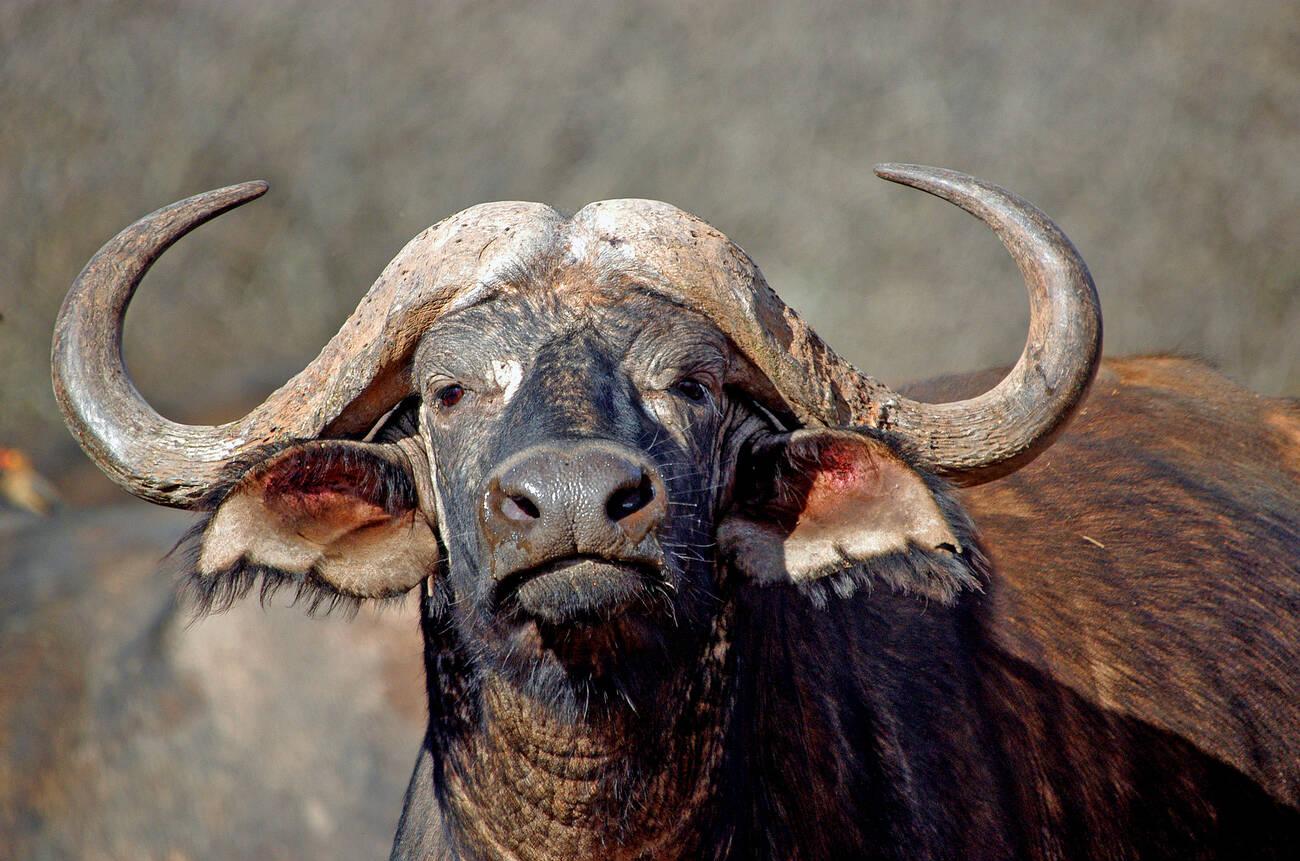
One of the most memorable parts of Mount Meru trekking is the remarkable wildlife encountered along the lower slopes. Because the mountain lies within Arusha National Park, animals move freely through their natural habitats. This unique setting allows trekkers to enjoy both a mountain expedition and a safari-like experience, creating an adventure that stands apart from many traditional high-altitude climbs around the world.

As you hike through the forest, you may encounter giraffes, buffaloes, elephants, warthogs, bushbucks, monkeys, and numerous colorful bird species. Wildlife sightings vary from day to day, making every trek slightly different. Observing these animals in their natural environment adds excitement to the journey and provides exceptional opportunities for photography while respecting the park’s conservation guidelines and protected ecosystems.

The presence of wildlife is one reason Mount Meru trekking feels different from other mountain adventures. Instead of beginning on isolated trails, hikers pass through living ecosystems filled with natural activity before reaching higher volcanic landscapes. This rare combination of wildlife, forest scenery, and mountain climbing creates a richer outdoor experience that appeals to nature enthusiasts as much as dedicated trekking enthusiasts alike.

Always follow your guide’s instructions and remain with your group throughout the trek to ensure safety around wildlife. Armed park rangers accompany climbers through the lower sections because large animals occasionally cross the trails. Respecting wildlife, avoiding sudden movements, and maintaining a safe distance help protect both visitors and animals while preserving the natural environment for future generations.
Accommodation on Mount Meru

Mount Meru trekking

Mountain Hut System on Mount Meru

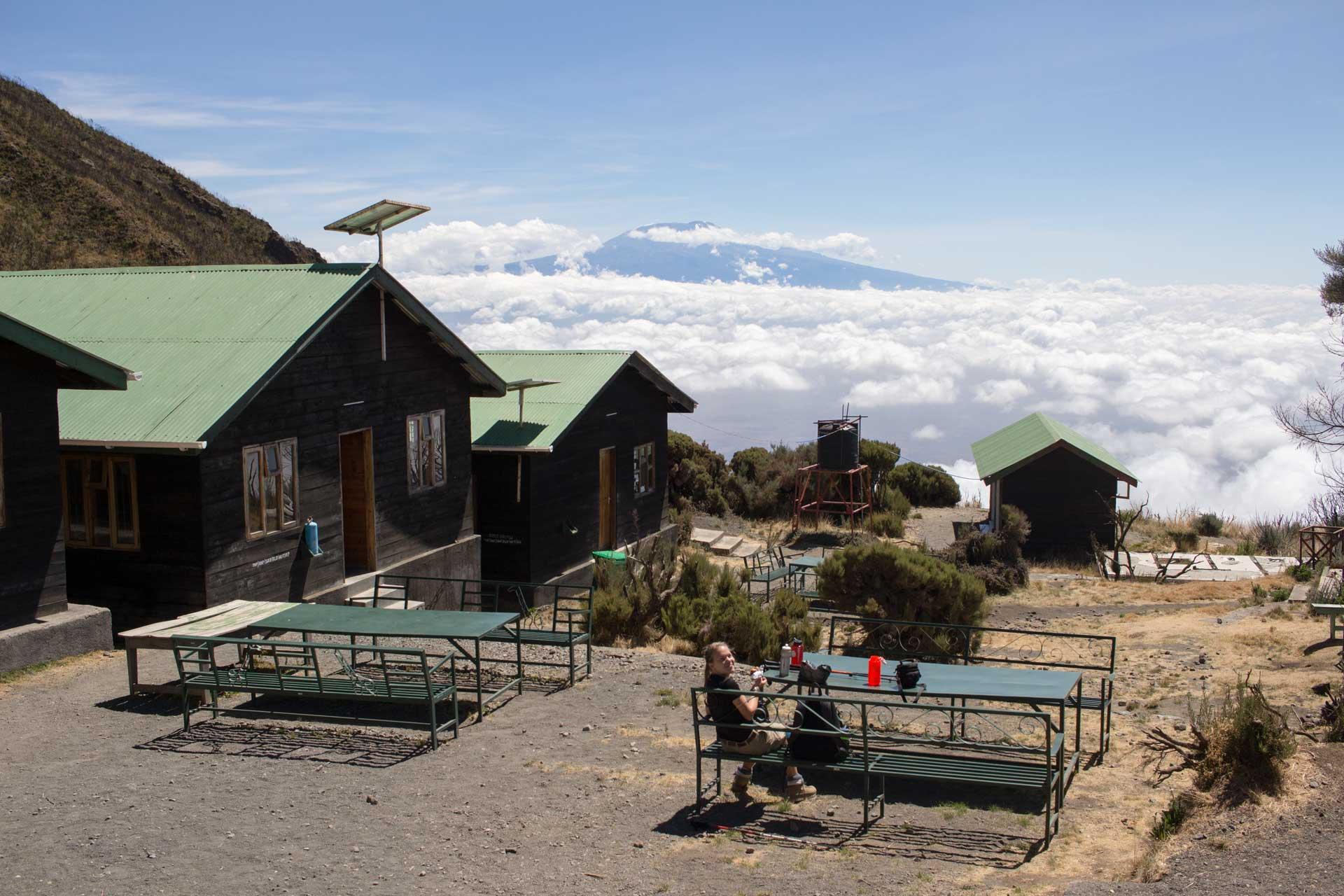
Unlike Kilimanjaro, Mount Meru trekking uses mountain huts instead of tents for overnight accommodation. This arrangement provides a more comfortable experience, especially for climbers who prefer sleeping indoors after a long day on the trail. The permanent shelters also simplify logistics, making the trek appealing to travelers seeking convenience while still enjoying an authentic high-altitude mountain adventure in Tanzania together.

Main Huts Along the Route

The two main accommodation points are Miriakamba Hut and Saddle Hut, strategically located along the trekking route. These huts provide comfortable stopping places where climbers can rest, recover, and prepare for the following day’s hike. Their locations also support gradual altitude adjustment, allowing trekkers to acclimatize naturally before continuing toward the summit of Mount Meru with greater confidence and comfort.

Facilities and Shared Experience

Both huts offer basic facilities, including bunk beds, shared dining areas, and simple toilet amenities. Although the accommodation is modest, it provides reliable shelter from cold temperatures and changing mountain weather. Trekkers usually gather in the dining areas to enjoy meals, exchange experiences, receive guide briefings, and relax before the next stage of their Mount Meru trekking adventure begins each morning.

Booking and Preparation Tips

Because accommodation capacity is limited, booking your Mount Meru trekking tour in advance is highly recommended, particularly during the busy climbing seasons. Carrying a warm sleeping bag and personal essentials helps improve overnight comfort inside the huts. While facilities remain simple, the welcoming atmosphere and practical shelter provide everything necessary for a rewarding and well-organized mountain climbing experience.

Tips for Successful Mount Meru Trekking

Preparing physically

before your trip greatly improves your Mount Meru trekking experience. Regular hiking, cardio exercises, and strength training help build endurance for long climbing days and steep sections. Practicing with a loaded backpack can also improve balance and stamina. Good physical preparation allows you to enjoy the scenery more comfortably while reducing fatigue and increasing confidence throughout the climb.

Walking slowly

is one of the most effective ways to complete Mount Meru trekking successfully. Maintaining a steady pace gives your body enough time to adjust gradually to increasing altitude while conserving energy for the summit climb. Rushing often leads to unnecessary exhaustion, whereas consistent, controlled progress improves comfort, supports acclimatization, and makes the overall trekking experience more enjoyable and rewarding for everyone.

Staying properly hydrated

is essential throughout Mount Meru trekking because higher altitudes increase the body’s need for fluids. Drinking water regularly helps reduce the risk of dehydration and may lessen symptoms associated with altitude sickness. Combining adequate hydration with nutritious meals and sufficient rest supports better physical performance, allowing you to recover more effectively after each day’s demanding hike on the mountain.

Mount Meru vs Kilimanjaro

Many travelers compare Mount Meru trekking with Kilimanjaro climbing when planning a mountain adventure in Tanzania. Although both offer rewarding experiences, they appeal to different preferences and goals. Understanding their unique characteristics helps climbers choose the option that best matches their fitness level, available time, budget, and expectations for scenery, wildlife, and overall trekking experience during their journey.

Mount Meru is known for its peaceful atmosphere, diverse wildlife, and changing landscapes within Arusha National Park. Trekkers often encounter giraffes, buffaloes, monkeys, and numerous bird species before reaching higher volcanic terrain. The quieter trails create a more intimate connection with nature, making the climb especially appealing to hikers seeking fewer crowds and a more relaxed mountain environment throughout.

Kilimanjaro, by comparison, is Africa’s highest mountain and one of the world’s most recognized trekking destinations. Its greater elevation presents a bigger physical challenge and attracts thousands of climbers each year from around the globe. Reaching Uhuru Peak is a remarkable achievement, but the experience is generally busier than Mount Meru because of its international popularity and multiple climbing routes.

Mount Meru trekking is an excellent choice for acclimatization before Kilimanjaro or as a rewarding standalone adventure. The climb develops confidence, introduces high-altitude hiking, and offers spectacular scenery without the larger crowds found on Africa’s highest peak. Whether chosen for preparation or personal achievement, Mount Meru delivers a memorable mountain experience that showcases Tanzania’s exceptional natural beauty and wildlife.

Who Should Do Mount Meru Trekking?

Beginners and First Time Climbers

Mount Meru trekking is suitable for beginners who want to experience a challenging mountain climb without immediately attempting Africa’s highest peak. While the trek requires determination and reasonable fitness, it remains achievable with proper preparation. The gradual itinerary, professional guidance, and well-established route make it an excellent introduction to high-altitude trekking for first-time mountain adventurers seeking confidence and valuable outdoor experience.

Experienced Hikers Seeking Challenge

Experienced hikers also find Mount Meru trekking highly rewarding because of its diverse landscapes, volcanic scenery, and demanding summit ascent. The combination of forest trails, rocky ridges, and panoramic viewpoints provides an engaging adventure beyond ordinary hiking routes. Even seasoned trekkers appreciate the mountain’s peaceful atmosphere, fewer crowds, and unique opportunity to combine wildlife encounters with a serious high-altitude climbing expedition in Tanzania.

Kilimanjaro Preparation Climbers

Travelers preparing for Kilimanjaro often choose Mount Meru trekking as an effective acclimatization climb before attempting the continent’s highest mountain. Spending several days at higher elevations helps the body adjust naturally to altitude while building confidence and endurance. This valuable preparation allows climbers to gain practical trekking experience, making the transition to Kilimanjaro more comfortable and increasing overall readiness for the challenge.

Nature and Wildlife Enthusiasts

Nature enthusiasts and wildlife lovers will especially enjoy Mount Meru trekking because the route begins within Arusha National Park, where animals roam freely across protected landscapes. Observing giraffes, buffaloes, monkeys, and colorful birds during a mountain expedition creates an experience rarely found elsewhere. This remarkable combination of wildlife viewing, scenic beauty, and adventurous trekking makes Mount Meru appealing to a wide variety of travelers.

FAQs:Complete Guide to Mount Meru Trekking

Is Mount Meru trekking suitable for beginners?

Yes, Mount Meru trekking is suitable for beginners who have a reasonable level of fitness and enjoy hiking. Although the trek is challenging due to its steep sections and high altitude, it is less demanding than climbing Mount Kilimanjaro. Proper preparation, a steady pace, and guidance from experienced park rangers and guides make the adventure achievable for many first-time trekkers.

How many days does it take to complete Mount Meru trekking?

Most Mount Meru trekking itineraries take 3 to 4 days. A 4-day trek is generally recommended because it allows better acclimatization, a more relaxed hiking pace, and extra time to enjoy the mountain’s forests, wildlife, and panoramic viewpoints before reaching Socialist Peak at 4,566 meters.

What is the best time of year for Mount Meru trekking?

The best time for Mount Meru trekking is during Tanzania’s dry seasons, from June to October and December to February. These months typically offer clear skies, dry trails, and excellent views of Mount Kilimanjaro. Trekking during the rainy seasons is possible but can involve slippery paths and reduced visibility.

Do I need a guide for Mount Meru trekking?

Yes. Mount Meru trekking requires all visitors to hike with a licensed guide and an armed park ranger. This regulation ensures both visitor safety and wildlife protection, as the lower slopes are home to animals such as buffaloes, giraffes, elephants, and other wildlife found within Arusha National Park.

How difficult is Mount Meru trekking compared to Kilimanjaro?

Mount Meru trekking is physically demanding because of its steep terrain and summit ascent, but it is generally considered easier than Mount Kilimanjaro due to its lower elevation. Many climbers choose Mount Meru as an excellent acclimatization trek before attempting Kilimanjaro, increasing their chances of a successful summit.

What should I pack for Mount Meru trekking?

Essential gear for Mount Meru trekking includes waterproof hiking boots, layered clothing, a warm jacket, gloves, a hat, trekking poles, a sleeping bag, sunscreen, sunglasses, a reusable water bottle, and a small daypack. Packing appropriate gear helps you stay comfortable as temperatures change dramatically between the forest and the summit.

What wildlife can I see during Mount Meru trekking?

One of the highlights of Mount Meru trekking is the opportunity to encounter wildlife before reaching the alpine zone. Hikers commonly see giraffes, zebras, buffaloes, warthogs, monkeys, antelopes, and numerous bird species. Unlike many mountain climbs, the trek begins with a walking safari experience inside Arusha National Park.

Is Mount Meru trekking worth it?

Absolutely. Mount Meru trekking offers spectacular volcanic landscapes, diverse ecosystems, abundant wildlife, fewer crowds, and breathtaking summit views of Mount Kilimanjaro. It provides an authentic Tanzanian mountain adventure for travelers seeking a rewarding climb without the heavy traffic found on Africa’s highest peak.